

A polyester–nylon towel is a functional towel made from blended polyester (PET) and nylon (PA) microfiber using specialized weaving techniques. With outstanding water absorption, fast drying, and durability, it is widely used in cleaning, household care, sports, and automotive detailing, making it a cost-effective alternative to traditional cotton towels.
The most common blend is 80% polyester + 20% nylon, while some premium versions use 75% polyester + 25% nylon. The two fibers complement each other:
Polyester: Provides structural strength, abrasion resistance, and wrinkle resistance. It maintains shape after repeated washing and offers strong chemical stability, resisting weak acids and alkalis—ideal for high-frequency laundering.
Nylon: Contributes softness, skin-friendly touch, high resilience, and superior water absorption. Its strong capillary action is the key factor in enhanced absorbency.
The towel is made from ultrafine microfiber, with a single-filament fineness of approximately 0.1–0.3 denier, much finer than ordinary cotton fibers (around 1.5 denier). The three-dimensional fiber structure offers a large surface area, enabling rapid absorption of water and oils.
Mainly produced using warp knitting or weft knitting. Warp-knitted towels have neat loops and stable structures, ideal for cleaning applications; weft-knitted towels offer better elasticity and are suitable for close-contact use.
Some products undergo fiber-splitting treatment (alkali reduction or physical splitting), separating composite fibers into finer filaments to further increase surface area and improve absorbency and cleaning performance.
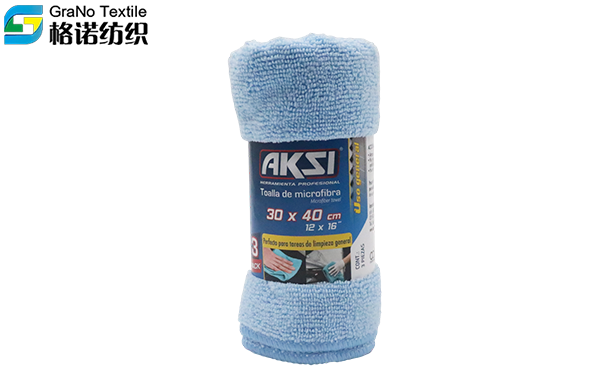
Flat loop structure: Uniform loop height (1–2 mm) with a smooth surface, suitable for delicate wiping of glass, paintwork, and other smooth surfaces without leaving water marks.
High-and-low pile structure: High pile (3–5 mm) for deep cleaning, low pile (1–2 mm) for polishing and drying—ideal for heavy oil and dirt removal.
Mesh-backed composite structure: A polyester mesh backing enhances tensile strength, prevents pile shedding, and extends service life.
Edges are treated with overlock stitching or heat sealing. Overlocked edges offer superior durability for industrial cleaning, while heat-sealed edges are smooth and burr-free, suitable for household and sports use to avoid skin irritation.
| Category | Typical Range |
|---|---|
| Fabric weight | Household: 200–300 g/m²; Thickened: 300–400 g/m²; Industrial: 400–500 g/m² |
| Size | Cleaning cloths: 30×30 cm, 40×40 cm; Face towels: 35×75 cm, 40×80 cm; Bath towels: 70×140 cm |
| Absorption capacity | 6–10 times its own weight (2–3× that of cotton towels) |
| Wash durability | Household ≥200 washes; Industrial ≥300 washes |
| Heat resistance | ≤60°C (avoid high temperatures to prevent fiber aging) |
The capillary action of microfiber rapidly absorbs moisture—over three times faster than cotton towels. Water remains between fibers rather than inside them, allowing the towel to air-dry naturally within 1–2 hours, reducing bacterial growth and odors.
The three-dimensional fiber structure traps dust and oil particles effectively. Most stains can be removed with water alone, making it ideal for kitchen grease, automotive surfaces, and household dust, with no fiber residue left behind.
The polyester–nylon blend resists tearing and abrasion, maintaining shape without pilling or shedding after repeated washing. Its chemical stability prevents mildew, giving it a lifespan 3–5 times longer than cotton towels.
Ultrafine fibers feel gentle to the touch and will not scratch delicate surfaces such as glass, stainless steel, phone screens, or automotive paint, making the towel suitable for a wide range of cleaning tasks.
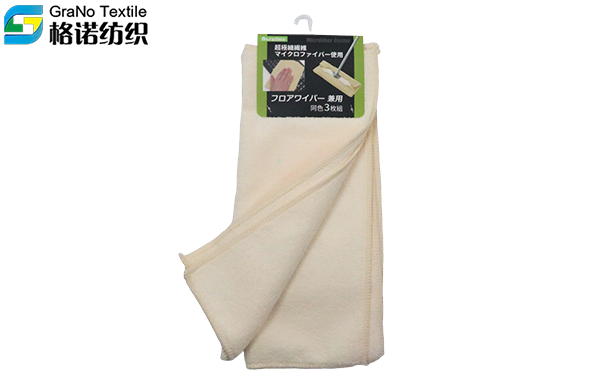
Removing grease from kitchen stovetops, range hoods, and tableware; wiping dust and water stains from floors, windows, and furniture; streak-free cleaning of bathroom tiles and mirrors.
Used as a sweat towel for running, fitness, or yoga—fast-drying and hygienic. Compact when folded for backpacks. Ideal after swimming or beach activities, easily shaking off sand.
Fine polishing of vehicle paint and windows; cleaning engine compartments and wheel rims; dust removal from interior leather and plastic surfaces without damage.
Wiping oils and cutting fluids from machinery; lint-free cleaning of laboratory instruments and electronic equipment; large-area, high-efficiency cleaning in hotels and professional housekeeping.
Avoid sharp objects that may snag and damage loops. Do not use bleach or strong acidic/alkaline detergents, as they can damage fiber structure and reduce absorbency.
Before first use, rinse in cold water to remove loose fibers and residual processing impurities.
Washing: Use a mild detergent at temperatures ≤40°C. Hand wash or gentle machine wash. For oily towels, pre-soak for about 10 minutes.
Drying: Squeeze out excess water and air-dry in a well-ventilated area. Avoid direct sunlight and high-temperature tumble drying, which accelerate fiber aging and reduce softness.
Replacement cycle: Household use—replace every 1–2 months; high-frequency industrial use—replace every 2–4 weeks to maintain hygiene and absorbency.
This website uses cookies to ensure you get the best experience on our website.
 Español
 Portugues



 Phone
Phone