

Item No.: C-0011
Material: Polyester-cotton blend
Size: 35*70cm, 40*40cm, 30*30cm… Customizable according to customer requirements
Color: Red, Yellow, Blue… Customizable according to Pantone color codes or color samples
Grammage: 150-380GSM
Usage: Used for cleaning in homes, kitchens, cars, and electronic equipment
Description and Use:
(1) The towel has high water absorption and a soft feel.
(2) The towel is very durable and easy to clean without detergent.
(3) It contains no chemicals and has no unpleasant odor.
(4) Soft, comfortable, and pleasant to the touch.
(5) Suitable for cleaning various cars, kitchenware, furniture, and pet supplies.
Color: According to customer requirements
Packaging: Standard export packaging or customized packaging according to customer requirements
Origin: Jiangsu, China
Payment Method: Bank transfer, Alipay, WeChat Pay
Minimum Order Quantity: 2000 pieces
Contact Person:
Ms. Xiao: +86 18906226220 / 15306222870 (WeChat)
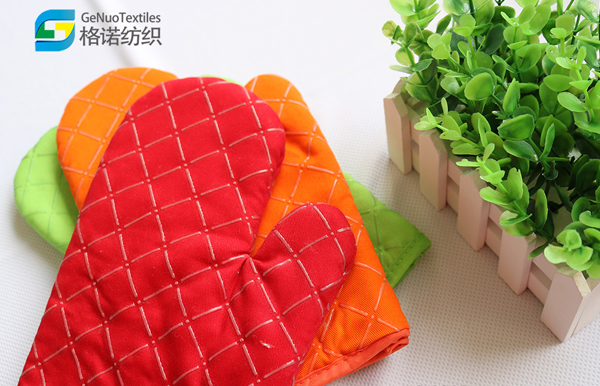
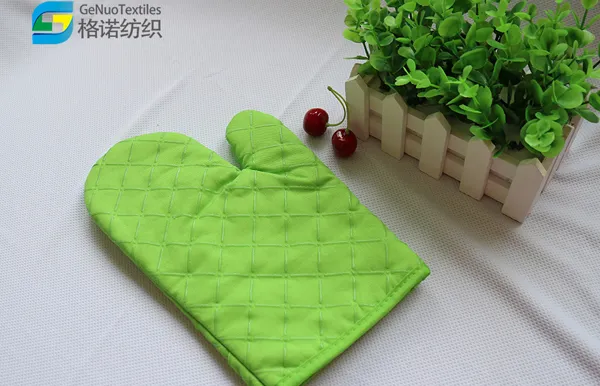
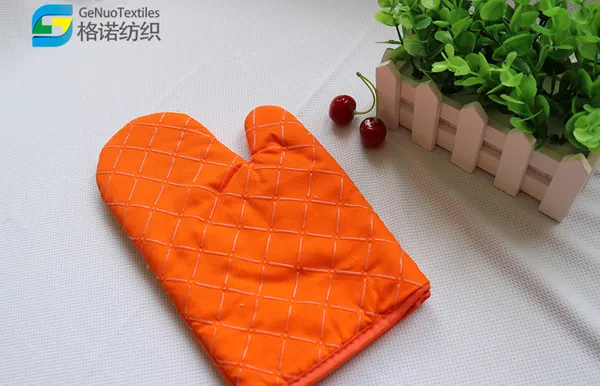
Non-slip Microwave Oven Gloves with silicone dots are kitchen heat-resistant gloves featuring silicone, PVC, or other non-slip raised patterns applied via dotting or molding techniques on the glove surface. They are designed for handling dishes or food in high-temperature environments such as microwaves, ovens, and steamers. Their core values include heat insulation, burn protection, and strong grip, making them suitable for home cooking, baking, and handling kitchenware. The raised patterns enhance grip while multi-layered structures ensure safety, durability, and practical usability. The following sections cover definitions, key features, materials and structure, specifications, design details, usage and maintenance, and selection tips.
Non-slip microwave oven gloves feature raised patterns created via silicone or PVC dotting on the palm and finger areas. These patterns improve grip and prevent slippage when handling smooth, hot dishes. Gloves come in five-finger or mitten styles to suit different operational flexibility and are an essential kitchen safety accessory.
| Function | Description | Use Case |
|---|---|---|
| Heat insulation & burn protection | Multi-layer materials block heat transfer. Suitable for microwaves (80–120℃) and ovens (180–220℃). Prevents hand burns. | Removing dishes from microwaves, oven baking, lifting steamer lids |
| Non-slip grip | Raised dots on palms/fingers improve grip on smooth hot cookware, preventing drops | Handling glass bowls, ceramic plates, baking trays |
| Water & oil resistance | Silicone/PVC layer repels water and oil for easy cleaning | Fried food handling, oily cookware |
| Easy storage | Equipped with hanging loops or straps for convenient storage | Kitchen hooks or walls |
| Durability | Raised pattern layer improves abrasion resistance and prolongs lifespan | Frequent kitchen use, baking studios |
| Material Type | Key Components | Heat Resistance | Advantages | Limitations |
|---|---|---|---|---|
| Silicone dots + Cotton composite | Food-grade silicone dots + cotton outer layer + heat-insulation cotton + cotton inner layer | 180–220℃ | Strong grip, breathable, skin-friendly, easy to clean | Silicone layer may be damaged by sharp objects |
| PVC dots + Polyester composite | PVC dots + polyester outer layer + insulation cotton + polyester inner layer | 120–160℃ | Affordable, durable | Limited breathability, lower heat resistance |
| Silicone dots + Aramid composite | Silicone dots + aramid fiber outer layer + insulation cotton + cotton inner layer | 250–300℃ | High heat resistance, tear-resistant | Higher cost, stiffer feel |
| Silicone dots + Canvas composite | Silicone dots + canvas outer layer + insulation cotton + cotton inner layer | 180–220℃ | Durable, breathable, non-slip and comfortable | Canvas absorbs oil, needs frequent cleaning |
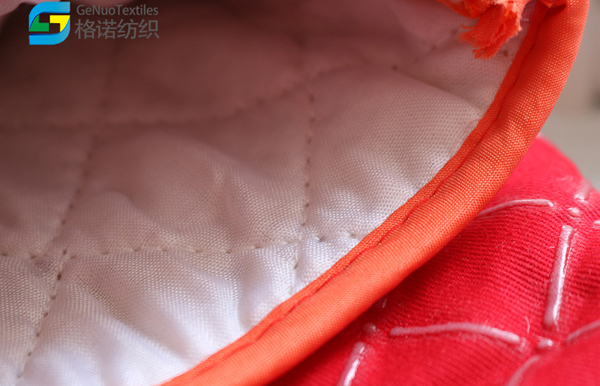
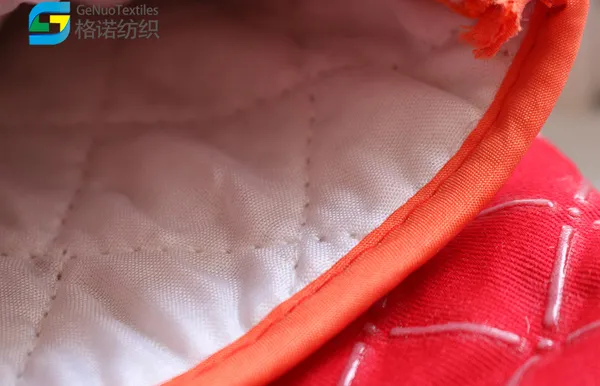
Multi-layer construction: Outer layer (dots + fabric) provides non-slip, abrasion resistance, and insulation; middle layer (cotton/polyester/aramid) enhances insulation; inner layer (cotton/microfiber) is skin-friendly and sweat-absorbent.
Extended cuff: 25–30 cm length protects wrists and forearms from steam burns.
Dot pattern distribution: Dots evenly cover palms, fingers, and partially the back of the hand for all-around grip.
Hanging loop: Convenient storage and ventilation.
Quilting: Secures multiple layers to prevent shifting and improve durability.
| Process | Description | Advantages | Suitable Materials |
|---|---|---|---|
| Silicone dotting | Food-grade silicone applied via mold and heat-cured to bond with fabric | Strong grip, high heat resistance, non-toxic | Cotton, polyester, canvas |
| PVC dotting | PVC melted and applied to fabric, then cooled to solidify | Affordable, durable | Polyester, nylon |
| Glue dotting | Dispensed via dotting machine to create uniform raised patterns | Simple, uniform | Various fabrics, mass production |
Shapes: Commonly circular (0.5–1 cm diameter), diamond, stripe, honeycomb. Circular is versatile; diamond/stripe gives stronger grip.
Distribution: Dense on palms, sparser on finger joints for flexibility.
Height: 0.2–0.5 cm; too high reduces flexibility, too low reduces grip.
| Type | Range | Description |
|---|---|---|
| Length | 25–30 cm (including cuff) | Covers hands to forearms for full protection |
| Width | 10–17 cm | Fits adult palms comfortably |
| Thickness | 1.0–1.5 cm | Thicker layers increase insulation |
| Weight | 60–100 g per glove | Lightweight to avoid fatigue |
| Dot density | 0.5–1 cm spacing, evenly distributed | Ensures grip without restricting flexibility |
Safety: Food-grade silicone must meet GB 4806.10; fabrics must meet GB 18401 B-class (no formaldehyde or heavy metals).
Heat resistance: ≥180℃ suitable for microwaves and standard ovens.
Dot adhesion: Dots must remain intact after 50 washes or abrasions.
Durability: No significant deformation, seam failure, or dot damage after 50 washes; insulation remains effective.
Fabric preparation: Cotton pre-shrunk, set, dyed.
Silicone prep: Food-grade silicone mixed with vulcanizer, impurity-free.
Dotting: Applied to palms/fingers via dotting machine, heat-cured in mold.
Layer composite: Combined with insulation and inner layers; quilted to secure.
Cutting & sewing: Cut to glove pattern, sew five-finger or mitten style, reinforce cuffs, attach hanging loops.
Fabric prep: Cleaned, dried, and set polyester fabric.
PVC dotting: Heated PVC applied, cooled to solidify.
Composite & sewing: Combined with inner layer, stitched into gloves, add hanging loop.
Avoid direct contact with hot oven walls.
Ensure cuffs cover forearms when removing hot dishes.
Avoid sharp objects to protect dots and insulation.
Hang in ventilated area after use to prevent mold.
| Material | Cleaning | Care | Notes |
|---|---|---|---|
| Silicone + cotton | Hand/machine wash ≤40℃, mild detergent | Air dry, fold to maintain shape | No bleach |
| PVC + polyester | Hand wash ≤30℃, mild detergent | Air dry | Avoid strong acids/alkalis |
| Silicone + aramid | Hand wash ≤30℃, mild detergent | Air dry, avoid high heat | Avoid sharp objects |
Silicone dots: Replace when dots crack or peel, 1–2 years typical.
PVC dots: Replace when layer hardens or peels, every 6–12 months recommended.
High-temperature oven use: Prefer silicone + aramid, ≥230℃ heat resistance.
Daily microwave use: Silicone + cotton or PVC + polyester sufficient.
Inspect dot adhesion, evenness, and absence of air bubbles or cracks.
Ensure quilted layers are secure; hanging loops properly sewn.
Test insulation with 100℃ dishes.
Home kitchen: Handling microwaved or baked dishes and steamers.
Baking studios: Protect hands during high-temperature baking; dot patterns improve grip.
Commercial kitchens: Efficient handling of dishes, microwaves, and steamers, hygienic and safe.
Eco-friendly: More biodegradable silicone and organic cotton.
Functional integration: Antibacterial coatings, touch-screen compatible designs.
Pattern optimization: Biomimetic dot patterns (fingerprint-like) improve grip and dexterity.
This website uses cookies to ensure you get the best experience on our website.
 Español
 Portugues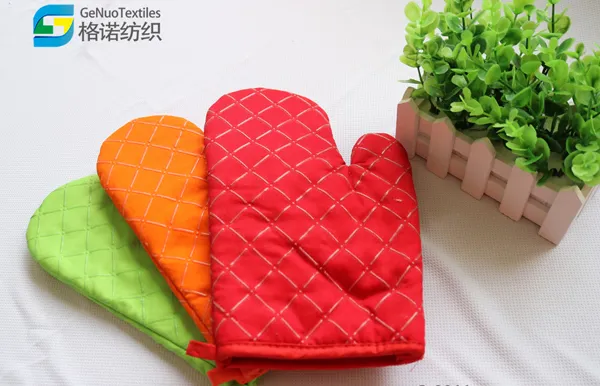



 Phone
Phone