

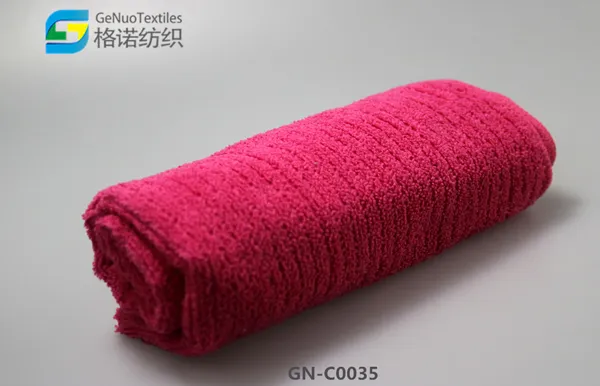
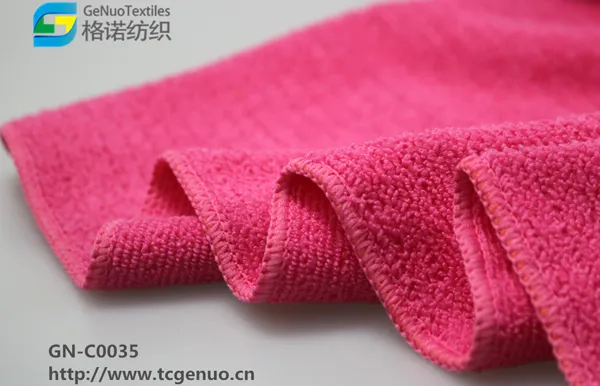
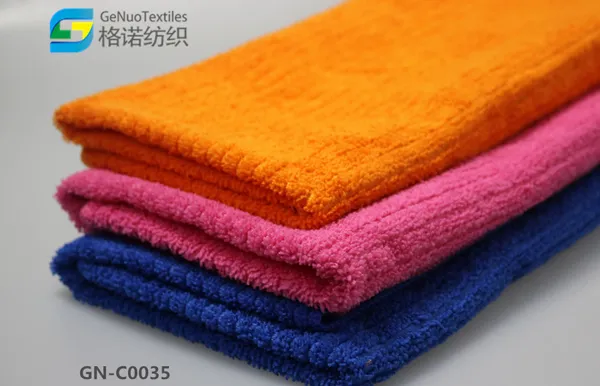
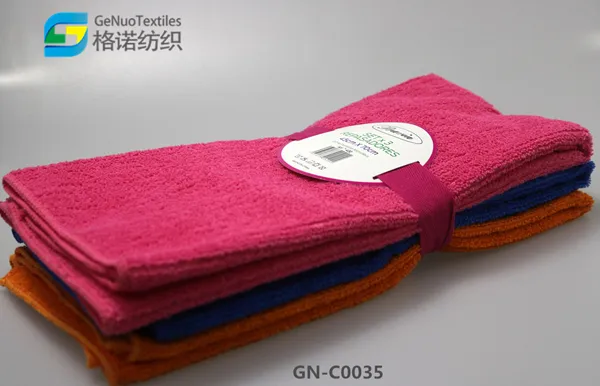
Product Number: GN-C0035
Material: 100% Polyester
Size: 45*70CM
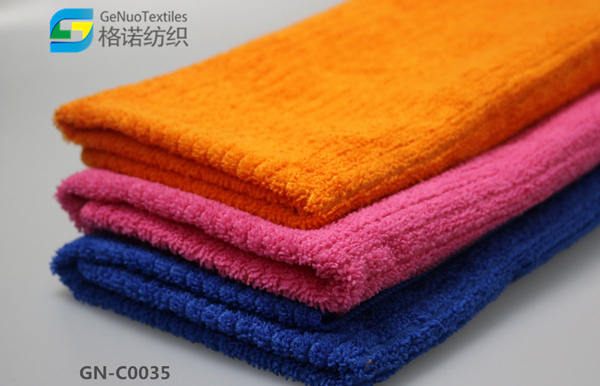
Color: Red, Orange, Blue... Can be customized according to Pantone color codes or samples
Weight per Square Meter: 240g
Uses: For cleaning household items, kitchens, cars, and electronic instruments
Description and Use:
(1) High absorbency and soft to the touch.
(2) Very durable and easy to clean without detergent.
(3) Contains no chemicals and has no unpleasant odor.
(4) Soft, comfortable, and pleasant to the touch.
(5) Suitable for cleaning various cars, kitchenware, furniture, and pet supplies.
Color: As per customer requirements
Packaging: Standard export packaging or customized packaging as per customer requirements
Origin: Jiangsu, China
Payment Method: Bank transfer, Alipay, WeChat
Minimum Order Quantity: 2000 pieces
Contact Person:
Ms. Xiao: +86 18906226220/15306222870 (WeChat)
The full polyester, three empty and one plain tea towel is made from 100% polyester yarn, woven using the “three empty, one plain” special technique (three columns of openwork alternating with one column of plain weave). This towel combines the durability and quick-drying properties of polyester with the lightweight, breathable structure of the openwork-plain design, suitable for tea ceremonies, kitchens, and commercial cleaning applications.
The main material is 100% polyester (PET fiber), with yarn counts typically 21–32s and single filament fineness of 1–3 denier, offering high abrasion resistance, wrinkle resistance, and dimensional stability, with shrinkage ≤3%. Repeated washing does not deform the towel.
Polyester features: Chemically stable, resistant to weak acids and alkalis, mold-resistant, smooth surface, easy to clean, and dries 2–3 times faster than pure cotton, ideal for high-frequency use.
Weaving pattern: Three columns of openwork (mesh structure with 0.5–1.5mm pores) alternate with one column of plain weave, forming a regular textured pattern.
Structural advantages: Openwork columns increase breathability and reduce weight, while the plain weave ensures structural strength and flatness. Solid color designs (white, beige, light gray, etc.) complement tea ceremony, kitchen, and minimalist style settings.
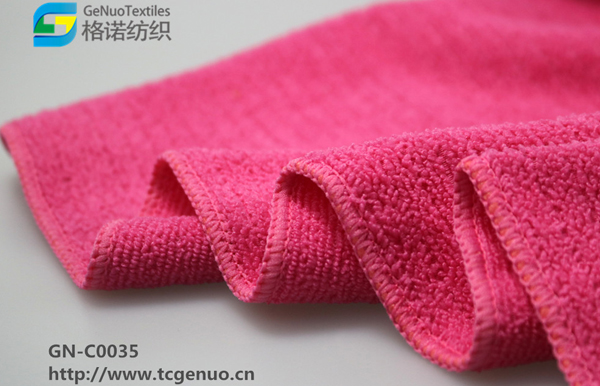
Base weaving: Woven with plain or weft knitting techniques. Needle arrangement and row control ensure uniform openwork and flat plain weave.
Shaping: High-temperature pre-setting (160–180°C) improves dimensional stability and prevents deformation after washing. Edges are hemmed or rolled to prevent fraying and prolong lifespan.
Plain color dyeing: High-temperature disperse dyeing ensures high color fastness (≥4 grade wash fastness) and prevents fading. Some towels are treated with anti-static finishing to reduce dust and static.
Hydrophilic treatment: Improves water absorption of polyester, enabling fast absorption of tea spills and water, suitable for frequent use.
| Category | Typical Range |
|---|---|
| GSM | 60–120g/m² (lightweight 60–80g/m² for tea ceremony, medium 90–120g/m² for kitchen cleaning) |
| Size | Tea ceremony: 30×40cm, 35×50cm; Kitchen: 45×60cm, 50×70cm |
| Thickness | 0.3–0.8mm, thinner in openwork areas, slightly thicker in plain weave areas, overall lightweight |
| Water absorption | 3–6 times its own weight; after hydrophilic treatment 5–8 times |
| Wash durability | Home use ≥200 washes, commercial use ≥300 washes, exceeding ordinary cotton towels |
Durable and easy to maintain: Polyester resists wrinkles and wear; the “three empty, one plain” structure resists pulling. Multiple washes do not cause pilling or fraying, ensuring long lifespan.
Quick-drying and breathable: Openwork allows airflow; polyester repels water, drying within 1–2 hours and reducing bacterial growth.
Easy to clean: Smooth surface allows tea stains and oil marks to be removed with water and mild detergent, leaving no fibers behind. Safe for food-contact surfaces.
Lightweight and aesthetically pleasing: Openwork-plain texture is minimalist and elegant. The towel is 30–50% lighter than cotton, easy to store and carry.
Tea ceremony: Wiping teapots, gaiwans, and tea trays, serving as a dry brewing mat or protective wrap for tea utensils. Solid colors suit refined tea settings.
Kitchen cleaning: Drying dishes, wiping stovetops, and cleaning countertops. Quick-drying polyester is ideal for frequent use, resistant to odor retention.
Commercial use: Table cleaning and dish drying in hotels and restaurants. High-frequency washing is tolerated, lowering replacement costs.
Other applications: Household dusting, pet cleaning, outdoor picnics (lightweight, portable, and stain-resistant).
Usage precautions
Avoid prolonged exposure to high temperatures (≥150°C) to prevent polyester softening and deformation. Do not use bleach, which can damage dye and fiber structure.
For high-precision optics, painted surfaces, and other delicate areas, ensure the towel has no hard impurities to prevent scratches.
Care methods
Washing: Use mild detergent, water ≤40°C, gentle hand or machine wash. Avoid rubbing the openwork sections vigorously.
Drying: Squeeze water and hang in a ventilated area; avoid direct sunlight to prevent fiber brittleness. Low-temperature ironing (≤110°C) is allowed to maintain flatness.
Replacement cycle: 2–4 months for home use; 1–2 months for commercial high-frequency use to prevent bacterial accumulation.
This website uses cookies to ensure you get the best experience on our website.
 Español
 Portugues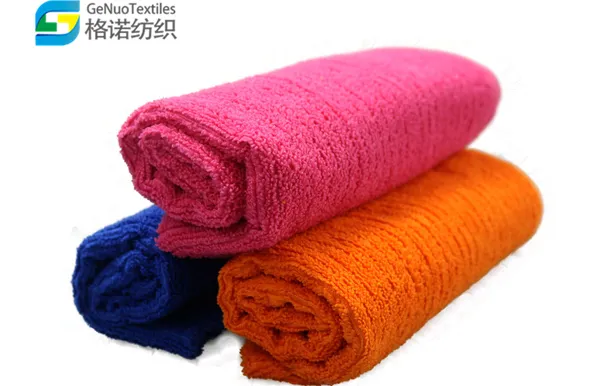



 Phone
Phone