

Microfiber Fabric has become a staple in households worldwide due to its unique properties, versatility, and exceptional performance. From cleaning cloths to towels and upholstery, microfiber products offer convenience, durability, and superior functionality compared to traditional fabrics. With a wide range of microfiber fabrics available on the market, choosing the best option for your home can be overwhelming. This guide provides an in-depth look at microfiber fabrics, their types, advantages, applications, and maintenance tips, helping you make informed decisions for every home use.
Microfiber fabrics are made from ultra-fine synthetic fibers, typically polyester and polyamide (nylon), with diameters smaller than a human hair. The combination of these fibers results in a soft, lightweight, and durable material that absorbs liquids effectively, resists stains, and can clean surfaces without leaving scratches. Their versatility makes them ideal for cleaning cloths, Microfiber Towels, terry cloth products, upholstery, and even bedding.
Microfiber fabric is a type of synthetic textile made from very fine fibers of polyester, polyamide, or a blend of both. The fibers are split during manufacturing, creating thousands of tiny hooks that can trap dust, dirt, and liquid efficiently. The resulting fabric is soft, highly absorbent, and resistant to wrinkling, shrinking, and stretching.
Microfiber fabric offers several key properties that make it superior to traditional fabrics:
High Absorbency – Microfiber can hold up to seven times its weight in water, making it ideal for towels and cleaning cloths.
Softness and Comfort – The fine fibers create a smooth surface that is gentle on skin and delicate surfaces.
Durability – microfiber cloths and fabrics withstand repeated washing and usage without losing structure or effectiveness.
Lint-Free Cleaning – microfiber cleaning cloths leave surfaces streak-free and dust-free.
Quick-Drying – Microfiber fabrics dry faster than cotton, reducing the risk of mold or mildew.
Antibacterial Potential – Some microfiber fabrics are designed with antibacterial or antimicrobial properties for hygiene-sensitive applications.
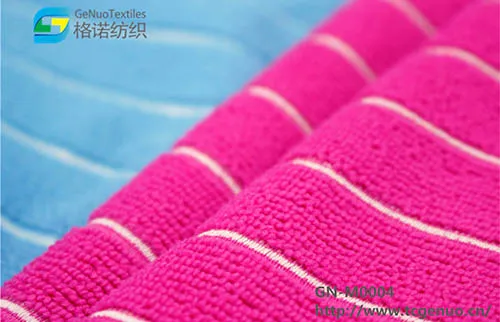
Microfiber fabrics are available in various types depending on construction, thickness, and intended use. Understanding these types can help you select the right fabric for your home.
Microfiber terry cloth features looped fibers similar to traditional cotton terry towels but made from synthetic fibers. It offers excellent absorbency and softness, making it suitable for bath towels, kitchen towels, and cleaning cloths.
Advantages:
Superior water absorption
Quick-drying
Soft and gentle on surfaces
Applications: Towels, bathrobes, dish towels, cleaning rags
Microfiber woven fabrics are tightly woven, providing a smooth and durable surface ideal for upholstery, curtains, and decorative items. The tight weave prevents dirt from embedding deep into the fabric while maintaining softness.
Advantages:
Durable and long-lasting
Easy to clean
Ideal for home décor and upholstery
Applications: Sofa covers, cushions, tablecloths, drapery
Knitted microfiber fabrics are stretchable and flexible, making them ideal for clothing, sportswear, and fitted home textiles. The knitted construction ensures breathability and comfort.
Advantages:
Stretchable and comfortable
Soft and lightweight
Good air circulation
Applications: Bedding, fitted sheets, sports towels, home textiles
microfiber cleaning cloths are specifically designed to trap dust, dirt, and grease. The split fibers create microscopic hooks that attract and hold particles, making them more effective than cotton or paper towels.
Advantages:
Lint-free cleaning
Reduces chemical cleaning products
Highly absorbent
Applications: Glass cleaning, electronic screens, kitchen surfaces, automotive detailing
When selecting microfiber fabric for your home, consider the following factors:
Microfiber fabrics are generally made from polyester, polyamide, or a blend. A 70-80% polyester and 20-30% polyamide mix is common for cleaning cloths due to high absorbency and durability. Polyester-rich fabrics are ideal for upholstery and decorative applications because of their strength and color retention.
Fabric density, measured in GSM (grams per square meter), indicates thickness and absorbency. High GSM Microfiber Towels are thicker, more absorbent, and better for heavy-duty cleaning or bath towels. Low GSM microfiber fabrics are lighter, quick-drying, and ideal for dusting or light cleaning.
The type of weave or knit affects texture, softness, and effectiveness. Terry weave microfiber fabrics excel in absorbency, while smooth woven microfiber is perfect for streak-free cleaning and upholstery.
Choose microfiber fabrics based on their purpose:
Cleaning cloths: Fine split microfiber, low to medium GSM
Towels: Terry microfiber, medium to high GSM
Upholstery: Tight woven microfiber, durable finish
Bedding: Knitted microfiber, soft and breathable
Microfiber fabrics should withstand frequent washing without losing softness or performance. Always check care instructions: most microfiber fabrics can be machine washed in cold or warm water and air-dried or tumble-dried at low temperatures.
Microfiber fabrics provide practical and aesthetic advantages:
Cost-Effective Cleaning – Microfiber cleaning cloths reduce the need for chemical cleaners while delivering Superior cleaning efficiency.
Sustainability – Long-lasting microfiber fabrics reduce waste and replacements compared to disposable cleaning materials.
Comfort and Luxury – Microfiber towels and bedding offer soft, plush comfort similar to cotton at a lower cost.
Versatility – From cleaning cloths to upholstery, microfiber fabrics suit multiple household needs.
Hygiene – The fine fibers trap bacteria and dust, promoting a cleaner home environment.
Microfiber cloths and towels are essential for effective home cleaning. They can be used dry for dusting or damp for polishing and scrubbing. Their absorbency makes them ideal for spills, and lint-free properties are perfect for glass, mirrors, and screens.
Microfiber towels, bathrobes, and kitchen towels offer superior softness and quick-drying properties. High GSM terry microfiber towels are gentle on the skin, highly absorbent, and reduce drying time.
Woven microfiber fabrics provide a durable, stain-resistant, and aesthetically pleasing solution for furniture covers, curtains, and cushions. Their texture mimics natural fabrics while being easier to maintain.
Knitted microfiber fabrics are breathable, lightweight, and soft, making them ideal for bedsheets, pillowcases, and mattress covers. They resist wrinkles and maintain shape over multiple washes.
Proper care extends the life and performance of microfiber fabrics:
Washing: Machine wash in cold or warm water, avoid bleach and fabric softeners.
Drying: Air dry or tumble dry on low heat to maintain fiber integrity.
Avoid Ironing: High heat can melt synthetic fibers.
Storage: Keep clean and dry to prevent mildew or odor accumulation.
Following these guidelines ensures your microfiber fabrics remain soft, absorbent, and effective for years.
Microfiber vs. Cotton: Microfiber is often mistaken for cotton due to its softness, but it offers superior absorbency and Cleaning efficiency.
Microfiber and Chemicals: Many believe microfiber requires chemical cleaners; in reality, microfiber can clean effectively with water alone.
Environmental Concerns: While microfiber is synthetic, proper care and reuse reduce environmental impact compared to disposable alternatives.
Check GSM and fiber ratio to match the intended use.
Consider weave type: terry for absorbency, woven for streak-free cleaning.
Inspect quality: high-quality microfiber has tightly split fibers and no loose ends.
Look for certifications: OEKO-TEX or equivalent ensures the fabric is free from harmful substances.
Read user reviews for real-world performance.
Choosing the best microfiber fabric for your home involves understanding fiber composition, weave type, GSM, and intended use. From cleaning cloths and towels to upholstery and bedding, microfiber fabrics provide unparalleled absorbency, durability, and comfort. By considering quality, care, and purpose, homeowners can enjoy long-lasting, functional, and aesthetically pleasing microfiber products throughout their home.
Microfiber fabrics are not just practical; they enhance home comfort, hygiene, and efficiency. Investing in the right microfiber fabrics ensures a cleaner, softer, and more sustainable living environment for years to come.
This website uses cookies to ensure you get the best experience on our website.
 Español
 Portugues



 Phone
Phone
Comment
(0)