

High-Quality Cleaning Towels play an essential role in household cleaning, commercial maintenance, automotive detailing, hospitality services, and industrial hygiene. Behind every durable and absorbent towel is a Terry Cloth Manufacturer that carefully controls raw materials, production processes, and quality standards. Understanding how a terry cloth manufacturer produces high-quality cleaning towels helps buyers, distributors, and end users evaluate towel performance, durability, and long-term value.
This in-depth guide explains the full manufacturing process, from fiber selection to finishing, highlighting the technical factors that allow a terry cloth manufacturer to consistently produce high-quality cleaning towels with superior absorbency, softness, and strength.
Before exploring production methods, it is important to understand what terry cloth is and why it is widely used in cleaning towels.
Terry cloth is a woven fabric characterized by uncut loops on one or both sides of the textile surface. These loops significantly increase surface area, allowing the fabric to absorb liquids efficiently. A terry cloth manufacturer adjusts loop length, density, and yarn structure to create cleaning towels with specific performance attributes.
A terry cloth manufacturer produces high-quality cleaning towels because terry cloth offers:
High liquid absorbency
Effective dust and particle trapping
Soft surface that reduces scratching
Structural durability under repeated washing
Versatility across cleaning applications
These advantages make terry cloth the preferred fabric for cleaning towels used in kitchens, bathrooms, workshops, automotive care, and professional cleaning environments.
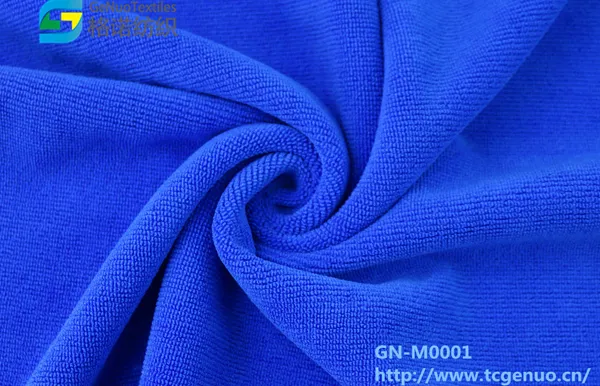
The foundation of high-quality cleaning towels begins with raw material selection. A terry cloth manufacturer carefully evaluates fibers to ensure consistency, durability, and absorbency.
A terry cloth manufacturer may select from several fiber options, depending on towel requirements:
Cotton fibers for natural absorbency and softness
Polyester fibers for durability and shape retention
Blended fibers to balance strength and moisture control
High-quality cleaning towels often use carefully engineered blends to enhance performance while maintaining cost efficiency.
A terry cloth manufacturer produces high-quality cleaning towels by using yarns with:
Uniform thickness
Low impurity levels
Controlled twist ratios
Consistent tensile strength
Poor yarn quality leads to linting, reduced absorbency, and premature fabric breakdown, which is why yarn inspection is critical in towel manufacturing.
Once fibers are selected, the terry cloth manufacturer prepares yarns through spinning and conditioning processes.
Fibers are cleaned to remove debris, short fibers, and contaminants. Proper alignment improves yarn strength and reduces breakage during weaving.
A terry cloth manufacturer adjusts spinning parameters to achieve:
Optimal yarn softness
Adequate tensile strength
Enhanced moisture absorption
Lower twist yarns improve absorbency, while higher twist yarns increase durability. High-quality cleaning towels typically use a balanced twist ratio.
Weaving is one of the most critical stages where a terry cloth manufacturer defines towel performance.
Terry cloth is produced using a specialized weaving method that creates looped pile yarns over a ground fabric. A terry cloth manufacturer controls:
Loop height
Loop density
Loop distribution
These parameters directly affect the towel’s Cleaning efficiency.
High-quality cleaning towels require accurate warp and weft tension. A terry cloth manufacturer uses precision looms to ensure:
Even fabric thickness
Consistent loop formation
Reduced fabric defects
Advanced weaving technology allows manufacturers to produce towels with uniform texture and reliable performance.
Fabric density, often measured in grams per square meter (GSM), is a key indicator of towel quality.
A terry cloth manufacturer produces high-quality cleaning towels by selecting appropriate GSM levels:
Lower GSM for lightweight, fast-drying towels
Medium GSM for general cleaning use
Higher GSM for heavy-duty absorbent towels
Proper GSM selection ensures the towel matches its intended cleaning application.
Higher density fabrics resist wear and maintain loop integrity after repeated washing. A terry cloth manufacturer monitors density throughout production to maintain quality consistency.
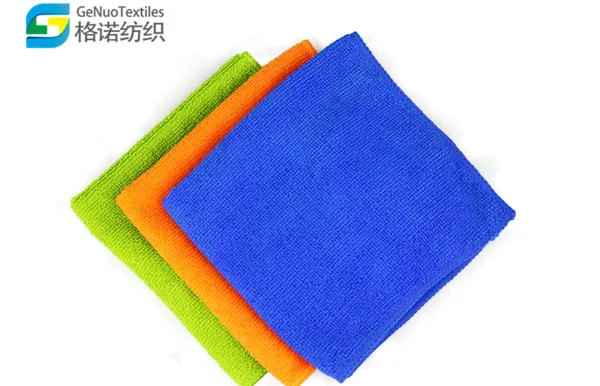
Color consistency and stability are essential for high-quality cleaning towels, especially in commercial use.
A terry cloth manufacturer applies controlled dyeing processes to ensure:
Even color penetration
Minimal fiber damage
Stable shade reproduction
Dye selection impacts fabric softness and absorbency.
High-quality cleaning towels must withstand frequent washing. A terry cloth manufacturer conducts tests for:
Wash fastness
Rubbing fastness
Light fastness
These tests prevent fading and color transfer during use.
Fabric finishing enhances the functional characteristics of terry cloth.
A terry cloth manufacturer applies softening processes to improve hand feel without reducing absorbency.
Pre-shrinking ensures that high-quality cleaning towels maintain size stability after laundering.
Linting is a common concern in cleaning towels. A terry cloth manufacturer minimizes lint through:
Controlled shearing
Enzyme washing
Loop stabilization processes
This results in cleaner performance on glass, electronics, and smooth surfaces.
After fabric finishing, towels are cut and sewn into final products.
Accurate cutting ensures uniform towel dimensions, which is important for packaging and commercial use.
A terry cloth manufacturer produces high-quality cleaning towels by reinforcing edges with:
Double stitching
Overlock seams
Hemmed borders
Strong edges prevent fraying and extend towel lifespan.
Quality control is a defining factor in how a terry cloth manufacturer produces high-quality cleaning towels.
Towels are tested for water absorption speed and capacity.
Manufacturers evaluate:
Tensile strength
Seam durability
Loop retention
These tests ensure towels perform well under repeated use.
Every batch undergoes inspection to detect weaving defects, uneven dyeing, or dimensional inconsistencies.
Modern terry cloth manufacturers increasingly focus on sustainable and safe production.
Efficient water and energy use reduce environmental impact while maintaining towel quality.
High-quality cleaning towels are produced using processes that minimize harmful residues and improve user safety.
Because of their versatility, high-quality cleaning towels are used across many industries.
Terry cloth towels effectively clean kitchens, bathrooms, and living spaces.
A terry cloth manufacturer designs towels for grease absorption, polishing, and detailing.
High-quality cleaning towels withstand intensive use in hotels, hospitals, and factories.
Understanding manufacturing principles helps buyers choose better products.
Key indicators include:
Even loop texture
Consistent fabric weight
Strong stitched edges
High absorbency without excessive lint
These characteristics reflect the standards used by a professional terry cloth manufacturer.
Innovation continues to influence how terry cloth manufacturers produce high-quality cleaning towels.
New loom technologies improve fabric consistency and efficiency.
Manufacturers are exploring enhanced absorbency, faster drying, and improved durability.
Eco-friendly production practices are becoming increasingly important in towel manufacturing.
A terry cloth manufacturer produces high-quality cleaning towels through precise control of materials, weaving, finishing, and quality inspection. Every stage of production contributes to towel performance, from absorbency and softness to durability and appearance.
By understanding how a terry cloth manufacturer produces high-quality cleaning towels, buyers can make informed decisions and select products that deliver reliable cleaning performance over time. Manufacturing expertise, process consistency, and quality standards remain the key drivers behind superior terry cloth cleaning towels in global markets.
This website uses cookies to ensure you get the best experience on our website.
 Español
 Portugues



 Phone
Phone
Comment
(0)