

In the cleaning products market, Polyester-cotton Cleaning Towels, combining the advantages of cotton and polyester, have become a popular choice that balances comfort and durability. These towels, through a balanced blend of the two fibers, retain the softness and skin-friendliness of cotton while incorporating the toughness and washability of polyester, making them widely used in home, commercial, and light industrial settings. This article will comprehensively analyze polyester-cotton cleaning towels from aspects such as material composition, performance characteristics, applicable scenarios, selection methods, maintenance tips, and market trends, providing practical reference for consumers.
I. Material Composition and Blending Characteristics of Polyester-Cotton Cleaning Towels
The core of polyester-cotton cleaning towels is the blend of polyester and cotton fibers, and their performance largely depends on the ratio of these two fibers. Common ratios include 65% polyester + 35% cotton and 50% polyester + 50% cotton. Products with different ratios exhibit significant differences in feel, absorbency, and abrasion resistance.
Cotton fiber, as a natural fiber, is characterized by its softness, gentleness against the skin, and strong absorbency. In polyester-cotton towels, the presence of cotton makes the towel gentler on surfaces, less prone to scratches, and quickly absorbs moisture and stains, making it suitable for cleaning delicate or sensitive materials. Polyester, as a synthetic fiber, boasts high strength, elasticity, and wrinkle resistance. Its addition enhances the overall structural stability of the towel, reducing deformation and wear during use and extending its lifespan.
The combination of these two fibers is not a simple mixing, but rather a process involving spinning and weaving to create a uniform fabric structure. High-quality polyester-cotton cleaning towels utilize a blending process to ensure the two fibers are evenly distributed throughout the yarn, preventing excessive concentration of fibers in certain areas that could lead to performance imbalances. For example, if the cotton proportion is too high, the towel, while soft, is prone to shrinkage and pilling; if the polyester proportion is too high, it may affect absorbency and feel. Therefore, a proper ratio is key to maximizing the overall advantages of polyester-cotton towels.
II. Performance Advantages of Polyester-Cotton Cleaning Towels
(I) Balanced Absorbency and Quick-Drying Properties
The hydrophilic properties of cotton fibers in polyester-cotton cleaning towels ensure excellent absorbency, quickly handling liquid stains during cleaning; while the hydrophobic properties of polyester accelerate the drying process after use, reducing the possibility of bacterial growth. Compared to pure cotton towels, polyester-cotton towels are not too heavy after absorbing water and dry in a shorter time, making them especially suitable for humid environments or frequently used scenarios.
(II) Moderate Softness and Abrasion Resistance
Cotton fibers give polyester-cotton towels a soft touch, making them less likely to leave scratches when cleaning surfaces such as furniture and tableware, protecting the integrity of the cleaned objects. At the same time, the addition of polyester fibers enhances the towel's abrasion resistance; after repeated wiping and washing, it is less prone to fiber breakage or edge damage, resulting in a significantly longer lifespan than some pure cotton cleaning cloths. This characteristic allows polyester-cotton towels to handle a certain level of daily use while providing gentle cleaning.
(III) Better Wrinkle Resistance and Dimensional Stability
Pure cotton towels are prone to wrinkling and shrinkage after washing, while polyester-cotton cleaning towels, due to their polyester content, exhibit significantly improved wrinkle resistance. They are less likely to wrinkle when hung or folded after use, maintaining a clean appearance. Furthermore, the stability of polyester reduces dimensional changes during washing, allowing the towel to maintain its original shape and size even after multiple washes, avoiding inconvenience caused by shrinkage.
(IV) Economical and Easy to Care For
The raw material costs and production processes of polyester-cotton cleaning towels are relatively mature, and their prices are generally lower than high-quality pure cotton towels, making them suitable for consumers seeking value for money. In terms of care, polyester-cotton towels are not demanding in terms of washing conditions, can withstand medium-temperature machine washing, and are not prone to fading. Daily maintenance requires no special treatment, reducing usage costs and operational difficulties.
III. Application Scenarios of Polyester-Cotton Cleaning Towels
(I) Daily Household Cleaning
In household cleaning, polyester-cotton cleaning towels are versatile. In the kitchen, it can be used to wipe dishes, stoves, sinks, etc. Cotton's absorbency quickly removes oil and water stains, while polyester's abrasion resistance allows for repeated washing. In the living room, its soft texture won't damage leather or glass surfaces when cleaning sofas, coffee tables, TV screens, etc. In the bedroom, it removes dust from bedside tables, dressing tables, and other furniture without leaving fibrous residue, making cleaning easier.
(II) Catering and Service Industry
Restaurants, cafes, and similar establishments have high requirements for the hygiene and durability of cleaning tools, making polyester-cotton cleaning towels an ideal choice. In the front of house, they can be used to wipe tables and cups, quickly absorbing liquids and keeping surfaces clean. In the back of house, their oil resistance and easy-to-clean properties reduce cleaning frequency and improve efficiency when cleaning kitchen utensils and work surfaces. Furthermore, polyester-cotton towels maintain good condition even after multiple uses, reducing consumable costs for businesses.
(III) Light Industry and Office Scenarios
In light industrial settings such as electronic offices and small processing plants, polyester-cotton cleaning towels can be used to clean equipment surfaces and office supplies. For example, when wiping computer keyboards and printer casings, the soft material won't scratch the equipment, and its moderate absorbency can handle small amounts of liquid spills. In small-scale machining, it cleans dust and oil stains from tool surfaces, ensuring cleaning effectiveness without damaging delicate parts due to excessive roughness.
(IV) Personal and Outdoor Cleaning
In daily life, polyester-cotton cleaning towels can also be used as personal cleaning aids, such as wiping hands and cleaning glasses. When picnicking or camping outdoors, carrying polyester-cotton towels is convenient and practical; they can clean tableware and wipe tables and chairs, their quick-drying properties avoid the inconvenience of dampness, and they are lightweight and easy to store, adding no burden to travel.
IV. Tips for Purchasing Polyester-Cotton Cleaning Towels
(I) Pay Attention to Fiber Ratio and Matching Use
When purchasing, choose a suitable fiber ratio based on the usage scenario. For household cleaning, if softness and absorbency are emphasized, choose products with a slightly higher cotton content (e.g., 50% or more); if frequent washing and high-intensity use are required, it is recommended to choose styles with a higher polyester content (e.g., around 65%) to enhance durability. Checking the mixing instructions on the product label is fundamental to ensuring the towel meets your needs.
(II) Observe the Fabric Density and Surface Texture
High-quality polyester-cotton cleaning towels have a uniform fabric density, clear texture, and a soft, substantial feel. Avoid products with sparse weave and a rough surface; these towels not only have poor absorbency but may also shed during use. Gently pull the edge of the towel to check for fiber shedding; excessive shedding indicates poor workmanship and affects the cleaning effect.
(III) Check Colorfastness and Sewing Quality
Colorfastness is a crucial indicator of polyester-cotton towel quality. Before purchasing, gently wipe the towel surface with a damp paper towel to observe for color bleeding. Products with severe color bleeding may contain excessive dye, which is neither environmentally friendly nor effective at cleaning. Also, check the sewing process; the edges should be neat and secure, with fine, even stitches, and no skipped or missing stitches, ensuring the towel won't easily come undone during use.
(IV) Emphasize Safety and Environmental Standards
Choose polyester-cotton cleaning towels that meet national textile product safety standards. Prioritize checking for safety indicators such as formaldehyde content and pH value. Reputable products undergo relevant testing to ensure they do not release harmful substances during use, making them especially suitable for families with children or allergies, ensuring safety during cleaning.
V. Maintenance Methods for Polyester-Cotton Cleaning Towels
(I) Proper Washing to Avoid Damage
When washing polyester-cotton cleaning towels, it is recommended to use a neutral detergent. Avoid using bleach and strong alkaline cleaners to prevent damage to the fibers and fading. The water temperature should be controlled between 30-40℃; excessively high temperatures may cause the cotton to shrink or the polyester to age. When machine washing, select the gentle cycle and wash alone or with similar light-colored fabrics. Avoid washing with sharp objects or heavy clothing to prevent snagging and abrasion.
(II) Proper Drying and Storage
After washing, towels should be spread out and dried promptly to avoid prolonged accumulation in the washing machine, which can lead to odors. When air drying, avoid direct sunlight to prevent fading and fiber brittleness. If using a dryer, select a low-temperature drying mode to prevent the towels from hardening due to high temperatures. For storage, fold completely dry towels neatly and place them in a well-ventilated, dry cabinet, away from damp environments and contact with irritating items such as mothballs to maintain their softness and hygiene.
(III) Regular Cleaning and Replacement
Even durable polyester-cotton towels will accumulate stains and bacteria after long-term use, requiring regular deep cleaning. Soaking in a neutral detergent at high temperature once a month can kill bacteria and remove residual stains. Replace towels promptly when they become noticeably thinner, pill severely, have reduced absorbency, or are damaged to avoid affecting cleaning effectiveness and hygiene. Generally, replacement every 3-6 months is recommended, adjusted according to usage frequency.
VI. Market Dynamics and Development Trends of Polyester-Cotton Cleaning Towels
With the diversification of consumer demands, the polyester-cotton cleaning towel market is showing a trend towards functional and differentiated development. On the one hand, functional polyester-cotton towels with antibacterial and anti-mite properties are becoming increasingly popular. By adding antibacterial components to the fibers, the hygienic properties of the towels are improved, making them particularly favored by households and the catering industry. On the other hand, colored and printed polyester-cotton towels have become new market favorites. Diverse designs meet consumers' aesthetic needs, allowing cleaning tools to blend into home décor.
Technological innovation is driving the improvement in the quality of polyester-cotton towels. New blending processes allow the two fibers to bond more tightly, reducing shedding and pilling. The application of environmentally friendly dyes reduces product irritation, aligning with green consumption principles. Furthermore, the widespread adoption of e-commerce platforms has made the sales channels for polyester-cotton towels more convenient. Consumers can quickly find suitable products through online reviews and recommendations, expanding market transparency and choice.
VII. Conclusion
Polyester-cotton cleaning towels, leveraging the complementary advantages of cotton and polyester, achieve a balance in absorbency, durability, and economy, becoming a practical choice for both household and commercial cleaning. Their diverse fiber ratios and wide range of applications meet the needs of different users, while simple maintenance further enhances ease of use.
When purchasing, choosing the appropriate fiber blend based on the intended use and paying attention to fabric quality and safety standards are key to obtaining high-quality products. As the market evolves, polyester-cotton cleaning towels with richer functions and superior quality will continue to meet consumer expectations, playing a vital role in the cleaning products industry and bringing greater convenience and efficiency to daily life and work.
Polyester-cotton Cleaning Towels are functional cleaning products made from a blend of polyester and cotton. Common ratios include 65/35, 50/50, and 80/20, adjustable according to the application—higher cotton content (e.g., 80/20 cotton-polyester) enhances water absorption, while higher polyester content (e.g., 65/35 polyester-cotton) improves durability and quick-drying. They are typically made with carded/combed cotton and low-elastic polyester fibers, woven via knit (terry) or woven (plain/diagonal) techniques, and may undergo anti-stain and antibacterial finishing to balance cleaning performance and durability.
| Feature | Description |
|---|---|
| Moderate Absorbency | Cotton fibers are hydrophilic; water is absorbed within ≤10 seconds, with absorption capacity 5–8× their weight, suitable for daily liquid spill cleaning. |
| Quick Drying | Polyester accelerates drying; in ventilated conditions, drying time ≤60 minutes, 2–3× faster than pure cotton, reducing bacterial growth. |
| Durable & Wear-Resistant | Polyester enhances tensile strength (≥120N/5cm); withstands repeated machine washing ≤40℃ without pilling, fraying, or matting; lifespan ≥1.5 years. |
| Soft & Surface-Friendly | Cotton improves softness; gentle on surfaces like furniture, electronics, and automotive paint. |
| Wrinkle & Shape Retention | Polyester minimizes wrinkling and shrinkage; shrinkage rate ≤3%, maintaining smoothness after multiple uses. |
| Cost-Effective & Easy Care | Mature materials and processes, stain-resistant, easy to wash, low maintenance costs. |
| Specification | Typical Parameters |
|---|---|
| Size | Cleaning squares 30×30cm, 40×40cm; general towels 50×70cm; industrial towels 60×90cm for different cleaning coverage. |
| GSM | 150–300g/m²; lightweight (150–200g/m²) is portable and quick-drying; heavyweight (250–300g/m²) is thick and durable. |
| Style | Terry (high absorbency), plain weave (easy cleaning), striped/solid colors (for zone separation); some include hanging loops or snaps. |
| Finishing | Optional antibacterial (silver ion) and stain-resistant treatment to improve Cleaning efficiency and hygiene. |
Blending & Spinning: Polyester and cotton fibers blended, spun at 20–40S, ensuring uniform yarn strength.
Weaving: Knitted terry cloth (high absorbency) or woven plain/diagonal weave (durable), density ≥350 threads/10cm.
Dyeing & Finishing: Reactive/disperse dyeing with heat fixation (120–150℃), colorfastness ≥3–4; optional antibacterial or stain-resistant coating.
Cutting & Edge Finishing: Precision cutting with ultrasonic or four-line stitching, preventing fraying and pilling, extending product life.
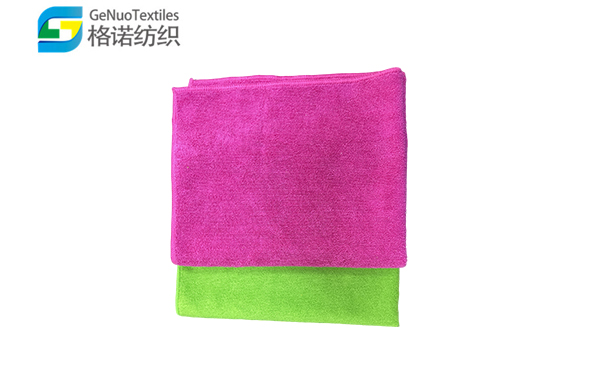
Home Cleaning: Kitchen (stove, dishes), living room (furniture, electronics), bathroom (tiles, mirrors). Terry style absorbs water, plain weave easy for grease.
Commercial Cleaning: Hotels, restaurants, salons. Solid colors help zone cleaning; wrinkle-resistant and easy maintenance for high-frequency use.
Automotive Cleaning: Terry for drying car bodies; plain weave for interior cleaning; soft and protective for paint surfaces.
Industrial Cleaning: Workshops, mechanical maintenance. Heavyweight towels handle oil and repeated use, reducing cost.
Tips: Use dry for dusting, wet for stains; colored towels can help separate cleaning zones to avoid cross-contamination.
| Material | Absorbency | Quick Dry | Durability | Wrinkle Resistance | Suitable Scenarios |
|---|---|---|---|---|---|
| Polyester-cotton | Good | Good | Excellent | Excellent | Daily, commercial, industrial cleaning with cost efficiency. |
| Pure Cotton | Excellent | Medium | Medium | Medium | Natural feel, light-duty surface cleaning. |
| Polyester Microfiber | Excellent | Excellent | Excellent | Excellent | High-standard cleaning (e.g., precision instruments), higher budget. |
Washing: Machine wash ≤40℃ with neutral detergent; do not bleach or use strong alkali; wash with like colors to prevent dye transfer.
Drying: Low-temperature tumble dry or air dry; avoid direct sunlight to prevent fiber aging and color fading.
Storage: Store in dry, ventilated place; avoid moisture and mold; prevent contact with sharp objects to avoid snagging.
Prohibitions: Do not iron above 110℃ with a cloth; avoid prolonged soaking in strong acid or alkaline solutions to prevent material damage.
This website uses cookies to ensure you get the best experience on our website.
 Español
 Portugues



 Phone
Phone