

In the cleaning supplies market, all-polyester edged mesh cleaning towels are gradually becoming a popular choice for homes, commercial establishments, and industrial settings, thanks to their unique material advantages and practical performance. These towels, primarily made of polyester, combine a mesh structure and edging process, exhibiting significant characteristics in terms of Cleaning efficiency and durability. This article will provide a comprehensive introduction to all-polyester edged mesh cleaning towels from the perspectives of material analysis, performance advantages, application scenarios, purchasing tips, maintenance methods, and market trends, offering valuable information for consumers and buyers.
I. Material Analysis of All-Polyester Edged Mesh Cleaning Towels
The core material of all-polyester edged mesh cleaning towels is polyester, also known as polyethylene terephthalate (PET), a synthetic fiber formed by the polycondensation of organic dibasic acids and diols. Polyester materials have high strength, good elasticity, and excellent wear resistance. After being processed into a mesh structure through special processes, the towels are further endowed with unique physical properties.
The mesh structure is one of the significant features of these towels. The mesh pores formed by weaving or knitting processes not only make the towel lightweight but also allow for rapid absorption of water and dirt during cleaning. Unlike the tight fiber structure of traditional cotton towels, the mesh design allows liquids and impurities to be more easily trapped and removed, reducing the possibility of dirt residue during cleaning.
The edging process is crucial for improving the towel's durability. By using overlocking and hemming techniques on the edges of the towel, it effectively prevents the mesh edges from fraying or unraveling during frequent use and washing. The common edging material is usually polyester thread of the same material, ensuring consistency in shrinkage rate and corrosion resistance between the edging and the main mesh fabric, avoiding deformation or cracking due to material differences.
II. Performance Advantages of All-Polyester Edged Mesh Cleaning Towels
(I) Excellent Water Absorption and Quick Drying
The mesh structure of all-polyester edged mesh cleaning towels provides ample channels for water penetration, allowing them to quickly absorb and store a certain amount of water upon contact with liquids, meeting immediate cleaning needs. At the same time, the hydrophobic nature of polyester fibers allows the towels to dry quickly after use, reducing the environment for bacterial growth and making them easier to keep dry and clean compared to cotton towels. (II) Excellent Wear Resistance and Tear Resistance
Polyester material itself has high tensile strength, and after mesh weaving and edge treatment, the overall structure of the all-polyester cleaning towel is more stable. During repeated wiping and scrubbing, it is less prone to fiber breakage or edge damage, resulting in a significantly longer service life than ordinary cleaning cloths. This wear resistance is particularly prominent in industrial environments, when dealing with rough surfaces or high-intensity cleaning tasks.
(III) Strong Chemical Resistance and Stain Resistance
Polyester fibers have good resistance to acids, alkalis, and other chemicals, making all-polyester edged mesh cleaning towels suitable for scenarios requiring the use of cleaning agents. Whether it's the detergents and disinfectants commonly used in household cleaning or the specialized cleaning agents used in industrial settings, they are unlikely to damage the structure and performance of the towel. In addition, the mesh surface is smooth, making it difficult for stains to adhere, and it can be easily cleaned with a simple rinse, reducing the amount of detergent used.
(IV) Lightweight, Portable, and Easy to Care For
The low density of all-polyester material makes the towel lightweight, convenient to carry and store. Whether it's hanging it to dry after daily household use or carrying it during outdoor cleaning tasks, it won't cause much burden. In terms of care, the all-polyester edged mesh cleaning towel can withstand high-temperature washing and is not prone to shrinkage or deformation. It maintains its original shape and size after multiple washes, eliminating the need for complicated maintenance steps.
III. Application Scenarios of All-Polyester Edged Mesh Cleaning Towels
(I) Household Cleaning
In daily life, all-polyester edged mesh cleaning towels can be widely used for cleaning in kitchens, bathrooms, living rooms, and other areas. In the kitchen, it can effectively wipe away grease and grime from stovetops and range hoods; the mesh structure easily absorbs oil stains without leaving scratches; in the bathroom, when used to clean tile walls and glass mirrors, it quickly removes water stains without leaving streaks; for furniture and floors in the living room, using this towel avoids the problems of lint shedding and streaking associated with traditional rags, making cleaning more efficient. (II) Commercial Service Establishments
Commercial establishments such as hotels, restaurants, and shopping malls have high demands for cleaning efficiency and hygiene standards, making all-polyester edged cleaning mesh towels an ideal choice. In hotel room cleaning, they can be used to wipe tabletops, windowsills, and bathrooms; their quick-drying properties reduce the frequency of towel changes. In restaurant kitchens and dining areas, their oil-resistant and easy-to-clean characteristics meet frequent cleaning needs, and their washability reduces long-term usage costs. In public areas of shopping malls, such as escalators and display cases, using these towels for cleaning keeps surfaces bright and clean, enhancing the overall image of the establishment.
(III) Industrial Production Workshops
Cleaning operations in industrial environments often face more complex situations. All-polyester edged cleaning mesh towels, with their wear resistance and chemical resistance, play an important role in fields such as mechanical processing, electronics manufacturing, and automotive repair. In mechanical processing workshops, they can be used to wipe oil stains and metal shavings from machine tool surfaces; electronics manufacturing workshops have extremely high cleanliness requirements, and the lint-free and anti-static properties (some are specially treated) of these towels prevent contamination of electronic components; during car repair, they are used to clean the car body and engine compartment, effectively removing oil stains and dust without damaging the paint surface.
(IV) Outdoor and Special Scenarios
In outdoor activities such as camping and picnics, the lightweight, portable, and quick-drying characteristics of all-polyester edged cleaning mesh towels make them an ideal cleaning tool. They can be used to wipe tableware and tables and chairs, and even as a simple rag in emergency situations. In addition, in pet care, they can be used to wipe stains and moisture from pets' bodies; the softness of the mesh fabric will not harm the pet's skin, and its easy-to-clean properties facilitate subsequent cleaning.
IV. Tips for Purchasing All-Polyester Edged Cleaning Mesh Towels
(I) Observe the Mesh Density and Weaving Process
High-quality all-polyester edged cleaning mesh towels have evenly distributed mesh and moderate density. Too large a mesh size may reduce water absorption, while too small a mesh size may affect quick-drying and cleaning effectiveness. At the same time, observe the weaving process, choosing products with clear texture and tight structure, avoiding defects such as skipped stitches and loose threads, as these defects will affect the durability and cleaning performance of the towel. (II) Checking the Quality of the Edging
The edging is crucial for ensuring the lifespan of the towel. When purchasing, carefully check whether the edging is flat and secure. High-quality edging has even and fine stitching, with no loose threads, and the edges are tightly attached to the mesh fabric. Gently pulling on the edging should not cause loosening or deformation. If the edging is poorly made, it is prone to unraveling and fraying during use, affecting the overall performance.
(III) Paying Attention to Material Purity and Thickness
Although called all-polyester towels, some products may contain other fibers to reduce costs, affecting performance. When purchasing, check the product label to confirm that the material is 100% polyester (excluding special functional products). Also, choose the appropriate thickness based on the usage scenario. For daily household cleaning, a medium-thickness product is suitable, balancing water absorption and lightness; for high-intensity industrial cleaning, a thicker towel can be chosen to improve wear resistance and durability.
(IV) Considering Functional Needs
With technological advancements, some all-polyester edged cleaning mesh towels have added special functions, such as antibacterial, anti-static, and microfiber properties. For households with infants or those with high hygiene requirements, antibacterial products are recommended; for cleaning in the electronics industry, anti-static models should be prioritized; when cleaning precision instruments or sensitive surfaces, microfiber mesh towels can reduce the risk of scratches and improve cleaning accuracy.
V. Maintenance Methods for All-Polyester Edged Cleaning Mesh Towels
(I) Correct Washing Method
When washing all-polyester edged cleaning mesh towels, it is recommended to use a neutral detergent, avoiding laundry powders or liquids containing bleach to prevent damage to the polyester fibers and edging stitching. The water temperature should be controlled between 30-60℃; excessively high temperatures may cause slight shrinkage or discoloration of the towel. It can be machine washed or hand washed. When machine washing, select a gentle cycle and avoid washing with other heavy clothing to prevent excessive friction and damage.
(II) Proper Drying and Storage
After washing, the towels should be dried promptly, avoiding prolonged storage in a damp environment. It can be air-dried naturally or tumble-dried. When air-drying, avoid direct sunlight to prevent fiber aging; when tumble-drying, the temperature should not be too high to avoid affecting the elasticity and structure of the towel. When storing, the completely dry towel should be folded neatly and placed in a well-ventilated and dry place, avoiding mixing with items that have peculiar odors or are corrosive, to maintain the cleanliness and service life of the towel.
(III) Regular Disinfection and Replacement
Although polyester-edged cleaning mesh towels are not prone to bacterial growth, they still need to be disinfected regularly after long-term use. Disinfection can be carried out by soaking in boiling water or using ultraviolet irradiation to ensure hygienic use. At the same time, even with proper maintenance, towels have a certain service life. When there is obvious damage, mesh deformation, or decreased water absorption, they should be replaced promptly to avoid affecting cleaning effectiveness and hygiene safety.
VI. Market Trends of Polyester-Edged Cleaning Mesh Towels
With the increasing demands of consumers for the performance of cleaning products and the growing awareness of environmental protection, the market for polyester-edged cleaning mesh towels is showing some new development trends. On the one hand, functional products are gradually increasing. In addition to traditional antibacterial and antistatic functions, biodegradable polyester materials are beginning to be used in towel production to meet environmental protection needs; on the other hand, personalized design is receiving attention, and manufacturers have launched products in different colors and patterns to adapt to the decorative styles of homes and commercial places, improving the aesthetics of the products.
In terms of technological innovation, the mesh weaving process is continuously optimized. By improving the fiber fineness and weaving density, the water absorption and softness of the towel are further enhanced. At the same time, the edging process is also being upgraded, using automated equipment for precise edging, improving the consistency and stability of the product. In addition, the development of e-commerce channels makes the sale of polyester-edged cleaning mesh towels more convenient. Consumers can easily obtain product information and user reviews through online platforms, providing more convenience for purchasing.
VII. Conclusion
Polyester-edged cleaning mesh towels, with the excellent characteristics of polyester material, the practical design of the mesh structure, and the durable guarantee of the edging process, demonstrate unique advantages in many fields. Whether it is for daily household cleaning, commercial premises maintenance, or industrial production operations, it can provide efficient and convenient cleaning solutions. When purchasing, consumers should pay attention to the quality of the mesh fabric, the edging process, the purity of the materials, and their functional needs, making a suitable choice based on the specific usage scenario. Furthermore, proper maintenance methods can extend the lifespan of the towel and ensure its continued good performance. With the continuous development of the market, all-polyester edged cleaning mesh towels with more comprehensive functions and stronger environmental protection features will gradually become an important part of the cleaning supplies market, bringing more convenience to people's lives and work.
The 100% polyester edge-bound mesh cleaning towel is made from 100% polyester, knitted or warp-knitted into a mesh structure, and reinforced with edge-binding/overlock stitching. The mesh texture improves breathability and Cleaning efficiency, while the edge binding enhances durability. It is suitable for high-frequency cleaning scenarios in household, automotive, and industrial applications. Key advantages include fast-drying, low-linting, and wear resistance.
Material: 100% polyester low-elastic DTY, ultra-fine polyester filament (0.1–0.3 denier). Premium versions use 100% polyester composite filament to improve water absorption and durability.
Mesh Texture: Mesh shapes include square, diamond, and hexagon; pore size 0.2–1.5cm. Mesh density and loop structure are controlled via warp/weft adjustments. The gaps between meshes create a “capillary effect” to accelerate water absorption and dirt capture; raised mesh surfaces improve scrubbing efficiency.
Edge Binding: Common methods include ultrasonic sealing, four-thread overlock, and heat-pressed binding. Edge width 0.3–0.5cm prevents fraying and enhances tensile strength, suitable for frequent pulling and machine washing.
Knitted Mesh: Circular or flat knitting machines; uniform mesh, good elasticity; lightweight (80–150g/m²) suitable for daily wiping.
Warp-Knitted Mesh: Tricot warp-knitting machine; stable mesh, no fraying; medium-heavy (150–300g/m²) suitable for industrial and automotive cleaning.
| Feature Category | Description |
|---|---|
| Water Absorption & Cleaning | Mesh accelerates water penetration; absorption time ≤5s; water uptake 4–7× towel weight; dual-use dry/wet for dust and grease; mesh traps dirt, leaving surfaces streak-free |
| Durability & Stability | 100% polyester tensile strength ≥180N/5cm; abrasion resistance ≥6000 cycles; reinforced edges withstand ≥50 machine washes without fraying; shrinkage ≤1.5% |
| Low Lint & Safety | Singed and pre-shrunk; lint ≤0.3%; soft fibers safe for glass, paint, and electronic screens |
| Easy Care & Cost-Effective | Machine wash ≤40℃ with neutral detergent; quick-drying within 1 hour; no ironing required; 40% longer lifespan than cotton towels, cost-effective |
| Functional Extensions | Optional antibacterial treatment (silver ion ≥99% efficacy), anti-static treatment; some versions with water/oil repellency, suitable for kitchen, medical, or outdoor use |
| Specification | Typical Parameters |
|---|---|
| Yarn Specification | 75D/36F, 100D/48F, 150D/72F polyester DTY; ultra-fine filament 0.1–0.3 denier |
| Weight Range | Lightweight 80–150g/m² (daily use); medium 150–220g/m² (general cleaning); heavy 220–300g/m² (industrial/automotive cleaning) |
| Size | 30×30cm (square towel), 40×60cm (general), 60×90cm (kitchen/automotive); custom sizes available; edge width 0.3–0.5cm |
| Mesh Parameters | Pore size 0.2–1.5cm; mesh shape: square/diamond/hexagon; density 10–30 meshes/cm² |
| Physical Indicators | Tensile strength ≥180N/5cm; abrasion ≥6000 cycles; lint ≤0.3%; shrinkage ≤1.5%; colorfastness ≥3–4 grade |
Warping/Coning: Maintain uniform yarn tension (20–25cN) to prevent mesh deformation; pre-set ultra-fine filaments to prevent breakage.
Weaving/Knitting: Knitting speed 300–380rpm, warp-knitting 350–420rpm; adjust feed and loop density for uniform mesh; monitor fabric flatness to prevent broken ends or missed stitches.
Post-Treatment
Singeing: Flame at 1000–1200℃ to remove surface fuzz, reducing lint.
Pre-shrink/Heat-Setting: 130–150℃, shrinkage ≤1.5%, stabilize mesh structure.
Functional Treatment: Antibacterial towels treated with silver ions; anti-static towels with anti-static agents; effectiveness ≥50 washes.
Dyeing & Fixing: Disperse dye 100–130℃ baking; soap wash to remove floating dye; improve colorfastness.
Edge Binding & Cutting: Ultrasonic sealing for lightweight, four-thread overlock for heavy-duty; neat edges, no fraying, suitable for high-frequency use.
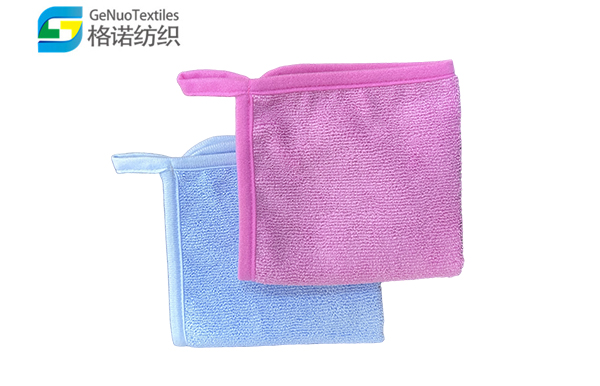
Household Cleaning: Kitchen towels (oil removal, durable), glass cleaning (low lint, streak-free), bathroom (quick-dry, mold-resistant), floor cleaning (dry/wet, no scratches).
Automotive Cleaning: Interior wiping, paint polishing (soft, scratch-free), engine cleaning (durable, wet/dry).
Industrial/Commercial: Machinery oil wiping, lab surface cleaning, hotel/restaurant use (bulk, easy care), electronics factories/cleanrooms (low lint, anti-static).
Delicate Surfaces: Electronics, optical instruments, precision equipment; mesh prevents fiber residue, protecting delicate surfaces.
| Comparison | Polyester Edge-Bound Mesh Towel | Polyester-Cotton Towel | Microfiber Towel |
|---|---|---|---|
| Water Absorption | Medium-high (4–7× weight) | Medium (5–8× weight) | Very high (10–15× weight) |
| Abrasion Resistance | High (≥6000 cycles) | High (≥5000 cycles) | High (≥8000 cycles) |
| Wrinkle Resistance | High (shrinkage ≤1.5%) | High (≤2%) | Very high (almost no shrinkage) |
| Linting | Low (≤0.3%) | Low (≤0.5%) | Extremely low (≤0.1%) |
| Cost | Medium, cost-effective | Medium | High |
| Suitable Scenarios | High-frequency cleaning, industrial/automotive | General cleaning | Delicate surfaces, premium cleaning |
Material & Edge Binding: Confirm 100% polyester, neat edge binding ≥0.3cm, no fraying.
Physical Indicators: Lint ≤0.3%, shrinkage ≤1.5%, colorfastness ≥3–4; test small sample for 3 washes to confirm performance.
Mesh & Weight: Daily cleaning: pore 0.5–1cm, weight 80–150g/m²; Industrial/automotive: pore 0.2–0.5cm, weight 150–300g/m².
Washing: Machine wash ≤40℃ with neutral detergent; avoid bleach or strong alkali; wash with similar colors.
Drying: Air dry or low-temp tumble (≤80℃); avoid direct sunlight to prevent fiber aging or mesh deformation.
Storage: Keep in dry, ventilated place; avoid moisture and mold; keep away from sharp objects.
Prohibited: No dry cleaning; ironing ≤110℃ with cloth pad, avoid direct contact with mesh.
| Mesh Pore Size | Weight (g/m²) | Suitable Scenarios |
|---|---|---|
| 0.5–1.0 cm | 80–150 | Daily household cleaning (kitchen, glass, bathroom) |
| 0.2–0.5 cm | 150–220 | Automotive, commercial cleaning |
| 0.2–0.5 cm | 220–300 | Industrial, machinery, heavy-duty automotive cleaning |
| Edge Binding Method | Width (cm) | QC Check Points |
|---|---|---|
| Ultrasonic Seal | 0.3–0.5 | Edge neatness, no fraying, tensile strength ≥180N/5cm |
| Four-Thread Overlock | 0.3–0.5 | Edge even, withstand ≥50 washes, no unraveling |
| Heat-Pressed Binding | 0.3–0.5 | Edge secure, no deformation, mesh integrity intact |
This version can be directly used for procurement specifications, quality control, and supplier communication.
This website uses cookies to ensure you get the best experience on our website.
 Español
 Portugues



 Phone
Phone